The 20-yard container is the middle size and the one most Philadelphia renovation jobs land on. Its walls sit about 4.5 feet tall, lower than the 30-yard and 40-yard boxes, so a crew can toss drywall, cabinets, and…
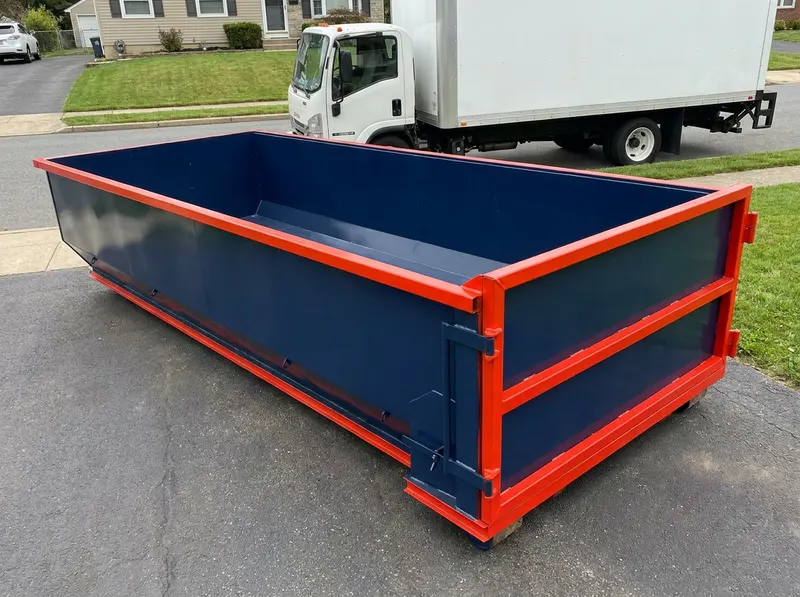
The 20-yard container is the middle size and the one most Philadelphia renovation jobs land on. Its walls sit about 4.5 feet tall, lower than the 30-yard and 40-yard boxes, so a crew can toss drywall, cabinets, and flooring over the side by hand instead of hauling everything up a ramp. A full-kitchen or bath gut in a Fishtown or Northern Liberties row home, a two-car-garage cleanout in Roxborough, or a mid-size roof tear-off in South Philadelphia all fit the 20-yard. Step 1, call or text a photo of the pile. Step 2, the team confirms the 20-yard is the right fit and quotes the flat $695. Step 3, delivery is scheduled, usually same-day or next-day. Step 4, you load it over the low side walls at your own pace. Step 5, the loaded box is hauled off and the debris is sorted at a permitted transfer station.
Sizing is a trade-off between the container footprint and how much debris you actually have. A 10-yard ($595) suits a single-room cleanout or a small bathroom; a 15-yard ($650) handles a larger room or a modest deck tear-down; the 20-yard ($695) covers a multi-room remodel or a 1,500-sq-ft roof; the 30-yard ($795) and 40-yard ($895) are for whole-house gut jobs and new construction where debris volume outweighs driveway space. If you are clearing a single Mount Airy or Germantown room and it barely fills a few bags and old furniture, the 10-yard saves $100. If you are gutting two floors, the 30-yard avoids a second haul. A dumpster rental is self-service - you load it, which is what separates it from full-service junk removal where a crew does the lifting.
Philadelphia logistics matter more than size on a tight street. A 20-yard box needs roughly a car-and-a-half of linear curb or driveway space to set down. On a narrow Point Breeze or Port Richmond block with parked cars both sides, a driveway or private lot drop is simpler than the street. When the container must sit on a public street or sidewalk, the City of Philadelphia requires a right-of-way or dumpster placement permit, which the property owner pulls through the Department of Streets. Placing a roll-off on plywood boards protects a finished Fairmount driveway from dents and scuffs. For debris that counts as household hazardous waste - paint, solvents, tires, batteries, propane tanks - the EPA bars it from a mixed-debris roll-off, and Philadelphia residents drop those at a city Sanitation Convenience Center instead. Contractors loading a 20-yard on an active site should follow OSHA jobsite safety practice and keep a clear walking path around the container.
The flat $695 is the whole bill when the load stays within the weight the box is rated to carry and holds only accepted material. Overfilling above the fill line so the box cannot be tarped and driven legally, or dropping in prohibited items like refrigerators with refrigerant still charged or construction concrete beyond a clean-fill limit, are the two situations that change a quote - both are flagged before pickup, not sprung afterward. Concrete, brick, and dirt are dense; a 20-yard filled with clean fill hits its weight ceiling long before its volume, so heavy inert loads are usually better split into a dedicated clean-fill run.
Every job gets a firm, written price after an on-site visit.
Tell us about your 20-yard dumpster rental job in Philadelphia and we'll send a clear, written quote, usually the same day.
 Blue Collar Dumpster Rental